Career in Medical Electronics Engineering: Scope, Courses & Institutes
Career in Medical Electronics Engineering: Scope, Courses & Institutes
By Test Hub | November 12, 2025 | 4 Mins Read
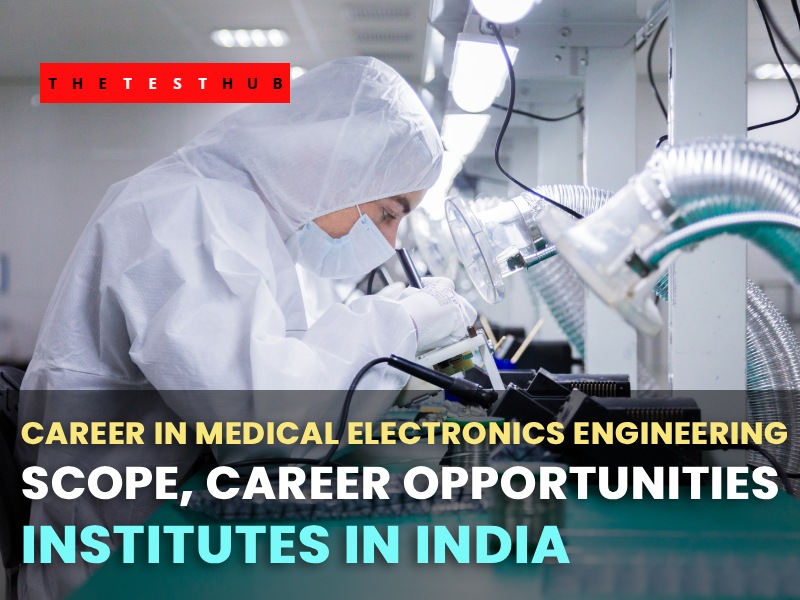
A career in Medical Electronics Engineering blends the worlds of medicine and technology. This innovative field focuses on applying engineering principles to healthcare for developing medical devices, artificial organs, prosthetics, and advanced imaging systems such as MRI. It plays a vital role in improving diagnosis, treatment, and patient care. As healthcare continues to evolve, professionals in this domain are in increasing demand for their expertise in designing and maintaining life-saving technology.
What is a Career in Medical Electronics Engineering?
A career in Medical Electronics Engineering involves the design and development of healthcare technology and medical devices using engineering and biological sciences. Graduates work on systems like artificial organs, MRI machines, and rehabilitation devices, ensuring technology enhances patient health and recovery.
Key Highlights:
-
Focuses on combining biology and engineering principles.
-
Involves creating diagnostic, therapeutic, and prosthetic devices.
-
Offers specialization in biomechanics, orthopaedics, and rehabilitation engineering.
Courses Offered
Medical Electronics Engineering can be pursued at the undergraduate level through several degree options.
Undergraduate Courses
-
Bachelor of Engineering (B.E.) in Medical Electronics
-
Bachelor of Technology (B.Tech) in Medical Electronics
-
Bachelor of Engineering in Medical Electronics Engineering
Each program focuses on providing a strong foundation in electronics, biomedical instrumentation, and health management systems.
Eligibility Criteria
To pursue a career in Medical Electronics Engineering, candidates must have completed their 10+2 examination with Biology, Mathematics, and Chemistry as core subjects.
For admission into Indian Institutes of Technology (IITs), qualifying in the Joint Entrance Examination (JEE) is mandatory.
The typical duration of the undergraduate program is 4 years.
Institutes Offering Medical Electronics Engineering in India
Several reputed institutions in India offer quality education in this field.
Top Institutes
1. Indian Institutes of Technology (IITs)
2. BMS College of Engineering, Bengaluru
-
Affiliated to Visvesvaraya Technological University (VTU)
-
Approved by AICTE & UGC
-
Accredited by NAAC
3. Dayananda Sagar College of Engineering, Bengaluru
-
Affiliated to VTU, Approved by AICTE & UGC
-
Accredited by NAAC
4. Dr. Ambedkar Institute of Technology, Bangalore
-
Affiliated to Visvesvaraya Technological University, Belgaum
-
Accredited by AICTE
Scope and Career Opportunities
Graduates in Medical Electronics Engineering have diverse opportunities across healthcare, research, and manufacturing sectors. They can work in hospitals, medical equipment industries, and biomedical research organizations. Job profiles include:
-
Biomedical Engineer
-
Clinical Engineer
-
Research Associate
-
Product Design Engineer
-
Quality Control Engineer
As technology advances, professionals in this field contribute to innovations like wearable medical devices, telemedicine systems, and advanced diagnostic tools.
Commonly Asked by Users
1. What is the scope of a career in Medical Electronics Engineering?
The scope is vast, with growing demand for experts who can develop and maintain medical equipment and systems used in modern healthcare. It combines innovation and service, making it ideal for those passionate about technology and medicine.
2. Which skills are essential for success in this field?
Analytical thinking, problem-solving, understanding of electronics, and knowledge of biological systems are essential for success in this interdisciplinary domain.
3. Is Medical Electronics Engineering a good career choice?
Yes. With advancements in healthcare technology and the increasing need for sophisticated medical devices, Medical Electronics Engineering offers excellent career growth and stability.
A career in Medical Electronics Engineering is both rewarding and impactful, offering a perfect mix of engineering innovation and healthcare advancement. By merging technical expertise with medical science, professionals in this field contribute to enhancing human health and well-being. For students passionate about using technology to improve lives, this is a field worth exploring.
Disclaimer The information provided in this blog is for general guidance only. Readers are advised to verify facts independently before making any decisions.
Explore More Resources
If you are preparing for entrance exams, internships, placement drives, or interviews, don’t miss out on valuable study materials, practice questions, and guidance.
Visit [The Test Hub](https://www.thetesthub.com/category/all/) to boost your preparation and achieve your goals.
Share this post:



Recent Article





Related Posts

Career in Physical Sciences: Scope, Opportunities & Top Institutes
A career in Physical Sciences offers a deep understanding of the natural world by studying ...
Read More
Career in Naval Architecture Engineering
A Career in Naval Architecture Engineering offers exciting opportunities for those fascinated by the design ...
Read More
Career in Mining Engineering: Scope, Courses, and Top Institutes in India
A career in Mining Engineering offers a unique blend of science, technology, and environmental management. ...
Read More
INSTRUMENTATION ENGINEERING Scope, Career Opportunities, Institutes in India
Instrumentation Engineering is a specialized branch of electrical and electronics engineering that focuses on the ...
Read More